Sep 13, 2026
5 Common Mistakes Steel Plants Make When Buying Nano Insulation Boards (And How to Avoid Them)
A B2B buyer's checklist: five commercial pitfalls steel mills hit when sourcing microporous nano insulation boards from China — and the RFQ template that prevents them.
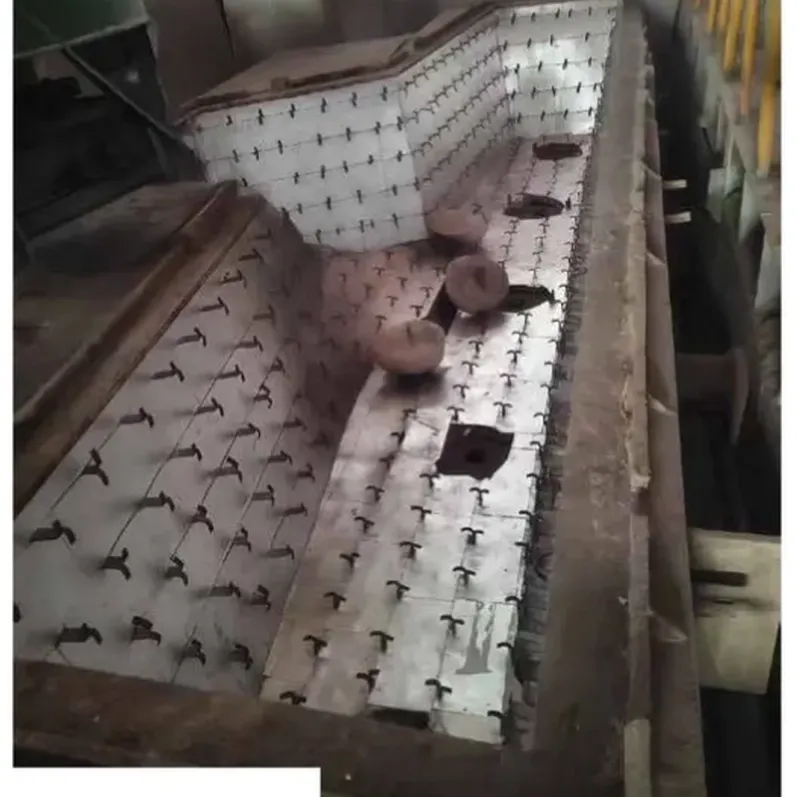
A practical procurement guide for steel mill buyers, refractory engineers and EPC sourcing managers evaluating microporous / nano insulation boards for ladle back-up lining, tundish covers and forging furnace hot-face insulation.
Reading time: ~9 minutes · Last updated: September 2026 · Audience: steelmakers, foundries, refractory distributors
Why this guide exists
Over the last three years we have shipped more than 12,000 m³ of /products/slm-1000-nano-insulation-board to over 70 steel mills, foundry plants and refractory distributors in 24 countries. And in almost every new customer conversation, the same five mistakes come up — sometimes inside the same RFQ.
Most of these mistakes are not technical. They are commercial, contractual or communication mistakes that originate in the buying process, not in the equipment. They cost real money: re-lining crews idled for weeks, energy bills 8-15% higher than they should be, warranty claims refused because of paperwork gaps.
This article walks you through the five pitfalls we see most often, and exactly how to structure your next enquiry so you don't pay for someone else's shortcut. If you are still deciding whether microporous insulation is the right category for your operation, start with our primer on why steel mills are switching to nano insulation boards for ladle back-up lining.
Mistake #1 — Buying on price per m² instead of cost per operating hour
The most common mistake, and the most expensive one.
Nano boards are typically quoted at USD 35–90 per m² depending on grade and density, while calcium silicate boards sit at USD 10–18 per m². On paper that looks like a 3–5× premium. But the only number that matters in steelmaking is how much it costs per ladle cycle, per ton of steel, or per operating hour of the furnace.
A typical 130-ton ladle fitted with 50 mm of SLM-1000 nano back-up lining instead of 75 mm of calcium silicate delivers:
Longer lining life — average 185 heats between re-linings versus 110 heats for calcium silicate in the same fleet;
Less steel temperature drop during transfer — 8–12 °C less, which directly reduces the ladle-furnace power-on time.
When you divide the installed cost by the number of heats it survives, the per-cycle cost of nano boards is often the same or lower than cheaper alternatives. A buying team that only compares m² prices will never see that.
How to avoid it
Add a second column to your bid table:
| Quotation | m² unit price | Total installed cost | Heats per campaign | USD per heat |
|---|---|---|---|---|
| Supplier A | 38 | 19,000 | 185 | 102.7 |
| Supplier B | 16 | 8,400 | 110 | 76.4 |
| Supplier C (nano) | 62 | 31,000 | 240 | 129.2 |
…then re-sort the table by USD per heat. The cheapest m² is rarely the cheapest heat.
Mistake #2 — Trusting the room-temperature thermal conductivity number
Almost every product brochure leads with a single number: thermal conductivity = 0.020 W/m·K (or 0.025, or 0.030). But conductivity rises with mean temperature, and the rise is not linear.
For a microporous board, you should expect k-values roughly like this:
| Mean temperature (°C) | 200 | 400 | 600 | 800 | 1000 |
|---|---|---|---|---|---|
| Typical 0.020 board (W/m·K) | 0.020 | 0.025 | 0.032 | 0.042 | 0.055 |
| SLM-1000 nano board | 0.022 | 0.024 | 0.026 | 0.030 | 0.034 |
| SLM-1200 nano board | 0.022 | 0.024 | 0.027 | 0.031 | 0.035 |
At 200 °C a cheap board looks identical to a premium one. At 1000 °C the cheap board is conducting 65% more heat, so the actual installed thermal performance of the wall can be off by 20-25%. That gap is what shows up as higher cooling-water bills and a hotter outer shell.
How to avoid it
Ask for the full λ-T curve tested at 200, 400, 600, 800 and 1000 °C (preferably two temperatures on each side of your operating mean) and the test method — ISO 22007 hot-wire or ASTM C518 guarded-hot-plate are both acceptable. A single room-temperature k-value is a marketing number, not an engineering input.
Mistake #3 — Skipping the thermal-cycling test report
Microporous boards are pressed from fumed silica + ceramic fibre + opacifier mix, then heat-treated. The internal pore structure is sensitive to repeated thermal cycling — what happens every time the ladle is emptied, moved and re-filled. A board that performs well in a steady-state lab test can crack, delaminate or shrink after only 30-50 cycles.
thermal cycles between 25 °C and 1000 °C, holding 30 min at peak each time;
Dimensional check at the end — linear change must stay within ±0.6%;
Visual inspection for surface cracks, edge chips, and joint gaps;
Post-cycle λ re-test at 600 °C mean — increase must stay below 15%.
Ask any supplier for their cycling report. If they only have a steady-state test sheet, they have not actually designed the product for your environment.
How to avoid it
In the RFQ template, include two mandatory attachments:
Thermal-cycling test report (≥ 20 cycles, full dimensional & re-λ data);
Reference list of at least three steel mills that have run the product for ≥ 12 months in equivalent service.
References can be anonymised, but they need to be real. Telephone numbers, plant names, and a reference contact are the only way to verify a cycling claim.
Mistake #4 — Treating nano board like calcium silicate during installation
We get service calls every quarter where a customer's installation crew has installed nano board the same way they have installed calcium silicate for 15 years. The board cracks within a month, and the customer concludes that "nano boards don't work" — when the actual issue is mechanical handling and joint design.
Three installation-specific behaviours that nano board must be respected for:
Cutting: use a fine-tooth carbide saw or a water-jet. Standard masonry blades shatter the silica skin and start a micro-crack that grows under thermal cycling.
Joint design: butt joints with 1-2 mm dry gaps work better than tightly-butted joints. The board needs room to expand on the first heat-up; calcium silicate tolerates tight joints because it is more compliant.
Anchoring: anchor bolts, where used, must be stainless steel 310 or 316, not zinc-plated carbon steel. Zinc melts at 420 °C and will fail inside the lining within a few cycles. Our application photos of the anchored ladle back-up assembly show the standard 6-anchor pattern with non-conductive ceramic washers.
If your installation contractor has not been trained specifically on microporous boards, the warranty from any supplier will be hard to claim. This single mistake generates more warranty rejections than all the others combined.
How to avoid it
Treat installation as a deliverable, not a footnote. The contract should specify:
Cutting tools (carbide-tipped blade or water-jet);
Anchoring material grade (310/316 SS with ceramic washers);
Joint gap tolerance (1-2 mm dry butt);
Crew supervisor trained by the supplier within the last 24 months.
The supplier — us or anyone else serious about this product — should be willing to do a one-day on-site or video training session as part of the PO. If they won't, ask why.
Mistake #5 — Buying on a single shipment, with no local stock or warranty path
Nano board, like all microporous insulation, is fragile in logistics. A 1200×600×50 mm panel has a high surface-to-volume ratio and can chip during container handling if not crated correctly. Two consequences:
A 6-week ocean shipment from China to a European or North American port can arrive with 8-15% breakage if the supplier doesn't use timber crate packaging with edge protectors;
An emergency ladle repair requires boards on the dock in 48-72 hours, not 6 weeks.
If your only source is a single factory on the other side of the planet with no agent, distributor or bonded warehouse closer to your plant, you have a single point of failure. A ladle that comes off-line for one unplanned week costs the plant more than a year of refractory savings.
This matters most for buyers outside China. If you are reading this from Brazil, Turkey, the Gulf, Southeast Asia, Europe or anywhere else, ask the question: where is the nearest 5 m³ of product you can drive a truck to?
How to avoid it
Build redundancy into the contract:
Require two suppliers (qualified) for any critical refractory grade, even if you only place orders with one;
Negotiate a safety stock option — the supplier holds, say, 8 m³ of your specified grade in their warehouse, billed only when you draw down;
Specify packaging standard in the PO — exported plywood crate with foam edge guards, shrink-wrap, and humidity indicator card inside;
Insist on a 24-hour spare-parts clause: when an emergency arises, a courier can be at your gate within X hours, or the supplier covers the difference in the cost of emergency relining.
For comparison, our standard export crate for nano board includes a humidity card, two metal banding, individual foam-corner protectors on every panel, and an exterior kraft-paper wrap — it has been tested on 40-foot containers to keep breakage under 0.5% on the longest sea routes we serve.
How to structure your next enquiry
To summarise the five pitfalls, here is the template we recommend for any microporous-board RFQ, whether you end up buying from us or someone else:
Operating envelope — mean service temperature, peak temperature, thermal-cycling frequency, exposed-face environment (steel contact, slag contact, flame contact, none).
Geometry & quantity — board size, total m², anchor pattern, joint design.
Performance requirements — λ at 200 / 400 / 600 / 800 / 1000 °C, post-cycle λ after 20 cycles, dimensional change ≤ ±0.6%, compressive strength ≥ 1.0 MPa.
Documentation pack — production flow chart, ISO 9001 certificate, thermal-cycling test report, 12-month reference contacts, MSDS.
Logistics & service — packaging standard, lead time, safety stock option, emergency response SLA, training availability.
A serious supplier answers every line. A trader who only quotes price per m² answers line 1 and line 2.
Closing thoughts
Microporous / nano insulation boards are a strong product category — when they are specified, supplied, handled and installed correctly. Five commercial mistakes — pricing-only thinking, single-point k-values, no cycling data, install-by-habit, and single-source logistics — are responsible for the majority of the failed installations we have been asked to troubleshoot over the past three years.
The good news is that all five are avoidable with a slightly more rigorous RFQ process. The savings in operating cost, lining life and emergency downtime typically pay for the higher purchase price within the first 8–14 months.
If you would like to walk through your specific application — ladle back-up, tundish cover, forging furnace, cement preheater or any other hot-face insulation job — send us your operating envelope and we will return a λ-T curve, an installation sketch and an indicative price within one working day. Contact us directly on WhatsApp +86 135 8471 3740 with your drawing or photo, and our engineering team in Nantong will reply in English or Chinese within hours.
For related reading:
Why the category is gaining share — Why steel mills are switching to nano insulation boards for ladle back-up lining
— Suleiman Refractory Board Engineering Team · Nantong, Jiangsu, China