Sep 17, 2026
How to Vet a Nano Insulation Board Supplier: A 12-Point Audit Checklist
A buyer's audit for qualifying a nano insulation board supplier — twelve questions across material data, production consistency and commercial terms, the red flags worth walking away from, how to run
Two boards can carry the same name, the same nominal thickness and very nearly the same price, and still deliver completely different campaign life. The difference is rarely visible on a data sheet, because the numbers that matter are the ones a weak supplier declines to put in writing.
This is the checklist we hand to buyers who are qualifying a second source or switching supplier. It takes about an hour to work through, and it separates the suppliers who can support a lining from the ones who can only ship board.
Why unit price is the wrong first question
Buyers comparing high-strength nano insulation boards on price per square metre are comparing the one number that matters least. What the plant actually pays for is cost per heat, and that is driven by thermal performance, dimensional consistency and whether the material arrives in a condition to install.
A board that underperforms by 15 percent on conductivity does not cost 15 percent less. It costs a hotter shell, a shorter working lining life, and a reline that comes early. That is the number to compare, and it is why the questions below focus on evidence rather than on price.
Part 1 — The material data (questions 1 to 4)
1. Where does the conductivity figure come from?
Ask for the test report, not the data sheet. Specifically:
Was it measured by an independent laboratory, or in the supplier's own lab?
At what mean temperature was it measured? A value quoted at 25 C is meaningless for ladle service; you want the curve at 400, 600 and 800 C mean.
Which method — guarded hot plate, or heat flow meter?
A supplier who can only quote a room-temperature value, or who will not name the laboratory, is telling you something.
2. What is the actual density and thickness range?
Not the target — the measured range across recent production. Ask for the last ten batch records if you can get them.
Density for this class of board typically runs 220 to 300 kg per cubic metre. A supplier quoting a single figure with no tolerance is quoting a target, not a capability.
Thickness tolerance of plus or minus 1 mm on a 50 mm board is achievable. Wider than that and your joint layout has to absorb it.
3. How is the maximum service temperature defined?
This is the question that catches the most suppliers. "Rated to 1200 C" can mean several different things:
The temperature at which permanent linear change stays under 2 percent after 12 hours? That is the honest definition.
The temperature at which the board merely survives without melting? That is nearly meaningless.
Ask them to state the definition in writing. If the answer is vague, assume the weaker definition. Where your mean service temperature runs above 1000 C, SLM-1200 is the grade to specify; the SLM-1000 vs SLM-1200 comparison guide explains how the rating boundary is set.
4. Can I see a blank certificate of analysis?
Before you order, ask for the template. You are checking that it contains measured values with a batch number, not a restatement of the specification range. A COA that only repeats the spec tells you nothing about the batch you are buying.
Part 2 — Production and consistency (questions 5 to 8)
5. What is the actual lead time, and what is the capacity?
Ask for both the standard lead time and the realistic one in peak season, and ask how many containers per month they ship. A supplier near capacity will slip when you need the material most.
6. How is batch-to-batch consistency controlled?
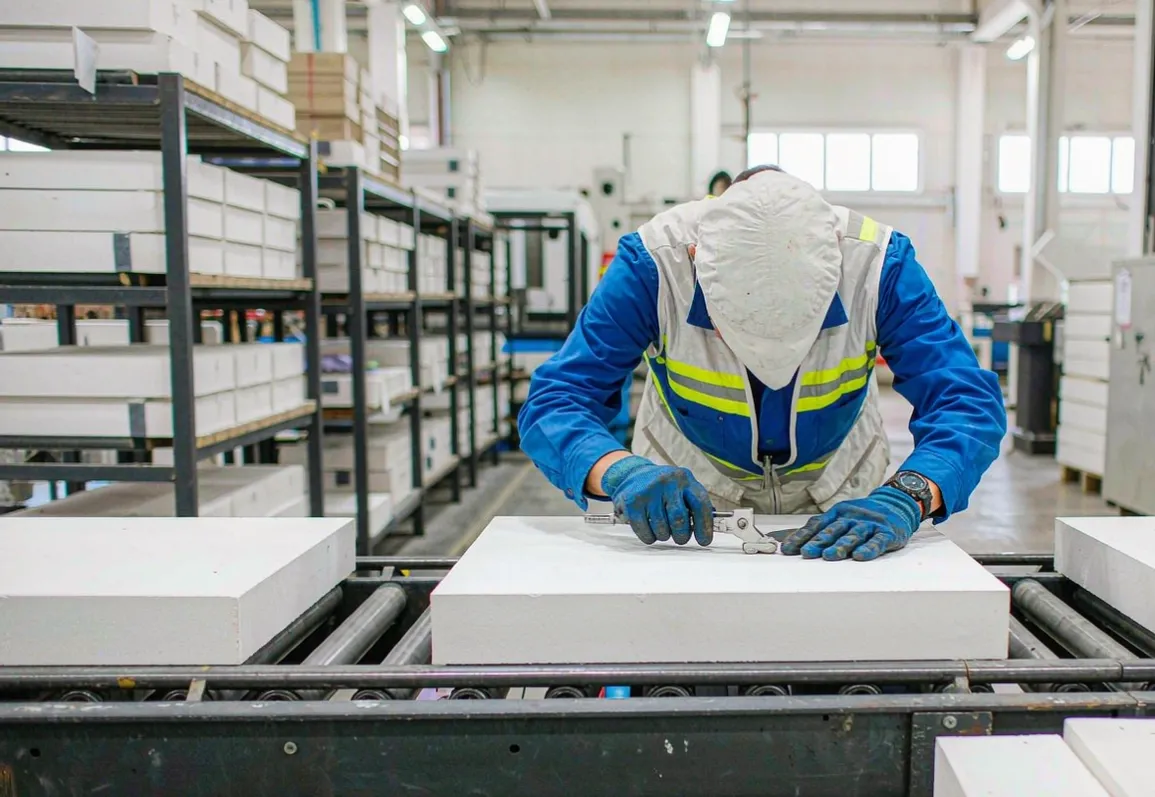
Listen for specifics: raw material lot control, press parameters logged per batch, density checked at what frequency. "We check every board" is not an answer — nobody checks every board. You want to know the sampling plan and what gets recorded.
7. What quality system and third-party audits exist?
ISO 9001 is a floor, not a differentiator. What matters more is whether the plant has been audited by customers, and whether they will host you or a nominated inspector. A supplier who welcomes an audit is usually worth auditing.
8. How long are retain samples kept?
This one is surprisingly revealing. If a supplier keeps batch retain samples for at least a year, they can investigate a claim properly. If they keep them for a week, any dispute becomes a matter of opinion.
Part 3 — Delivery and commercial terms (questions 9 to 12)
9. What is the export packaging, and how many containers have they shipped?
Experience shows up in the details: ISPM 15 stamped timber, desiccant quantity, humidity indicator cards, loading photographs before the seal goes on. Ask how many containers went out last year and to which ports. Our container loading guide covers what good export packing looks like and the piece counts you should be quoted.
10. What are the claim terms?
Specifically: how many days from delivery to notify, what evidence they require, and whether moisture damage is covered or only transit loss. A supplier confident in their packing will cover moisture.
11. Will they do the thermal calculation?
This separates a manufacturer from a trader. A real supplier will take your vessel geometry, working lining and service temperature and return a recommended grade and thickness, with the shell temperature you should expect. The thickness sizing method shows what a defensible answer looks like.
12. What is the minimum order quantity and the price structure?
Ask for the price at three quantity breaks. If the MOQ is set by a container rather than by production economics, that tells you something about how the material is made and stocked.
Red flags worth walking away from
Only "typical" values, never batch measurements.
Conductivity quoted at room temperature only.
Refusal to name the testing laboratory.
Lead time that changes every time you ask.
No trial quantity available — a supplier who will not sell you a small quantity to prove the material is not confident in it.
Claim terms shorter than 14 days, which is less time than it takes to inspect a container properly.
How to run a trial order properly
A trial is only worth doing if it is measured. The mistake most plants make is installing trial material alongside existing stock and then judging it on impression.
Trial a complete vessel or a complete zone, not a few boards scattered through a lining.
Record shell temperature at fixed points before and after, at the same point in the heat cycle.
Record the campaign length and the teardown condition, with photographs.
Inspect the trial delivery using the same routine you will use for production — the incoming inspection checklist exists so that trial and production material are judged identically.
Hold one retained board from the trial batch for later comparison.
Two heats of good data beats a year of opinion.
What to put in the request for quotation
Make the RFQ do the filtering for you. Ask for, in writing:
Conductivity at 400, 600 and 800 C mean, with the test laboratory named.
Density and thickness, with tolerances.
Maximum service temperature and the definition used.
A blank COA.
Packaging specification, including desiccant rate and humidity cards.
Claim period and what is covered.
Recommended grade and thickness for your stated conditions.
Suppliers who answer all seven clearly are usually the ones worth visiting. The five buying mistakes guide covers what happens when these are left out of the RFQ, and the anchored ladle back-up assembly page shows the standard anchoring arrangements a competent supplier should be able to specify for you.
What we would rather you asked
If you are qualifying us, ask all of the above. We would rather spend an hour on a hard question than ship material that disappoints in service — the cost of a failed trial is far higher for both of us than the cost of a thorough one.
Send us your vessel geometry, service temperature and target campaign length, and we will return a graded recommendation with thickness, the shell temperature you should expect, and the test reports behind the numbers. How SLM nano insulation boards are manufactured sets out what happens on our line and where the density and temperature limits actually come from.
— The Suleiman Refractory Engineering Team